
Bridging the Accessibility Awareness Gap
Today, I want to tackle one of the biggest challenges we face as designers: the lack of awareness about accessibility among clients, colleagues, and stakeholders.
As digital product designers, it’s important to educate our companies and clients about the significance of accessibility on user satisfaction, market reach, brand reputation, and overall business success. More than that, it is not just our ethical responsibility, it’s a legal requirement too. By fostering understanding and dispelling misconceptions, we can showcase how inclusive design enhances user experience, engagement, and even compliance.
Let us familiarize ourselves with the Web Content Accessibility Guidelines (WCAG), endorsed by leading standards organizations. These guidelines provide a roadmap for creating accessible digital properties, covering essential aspects like alternative text for images, intuitive navigation, keyboard accessibility, and compatibility with assistive technologies.
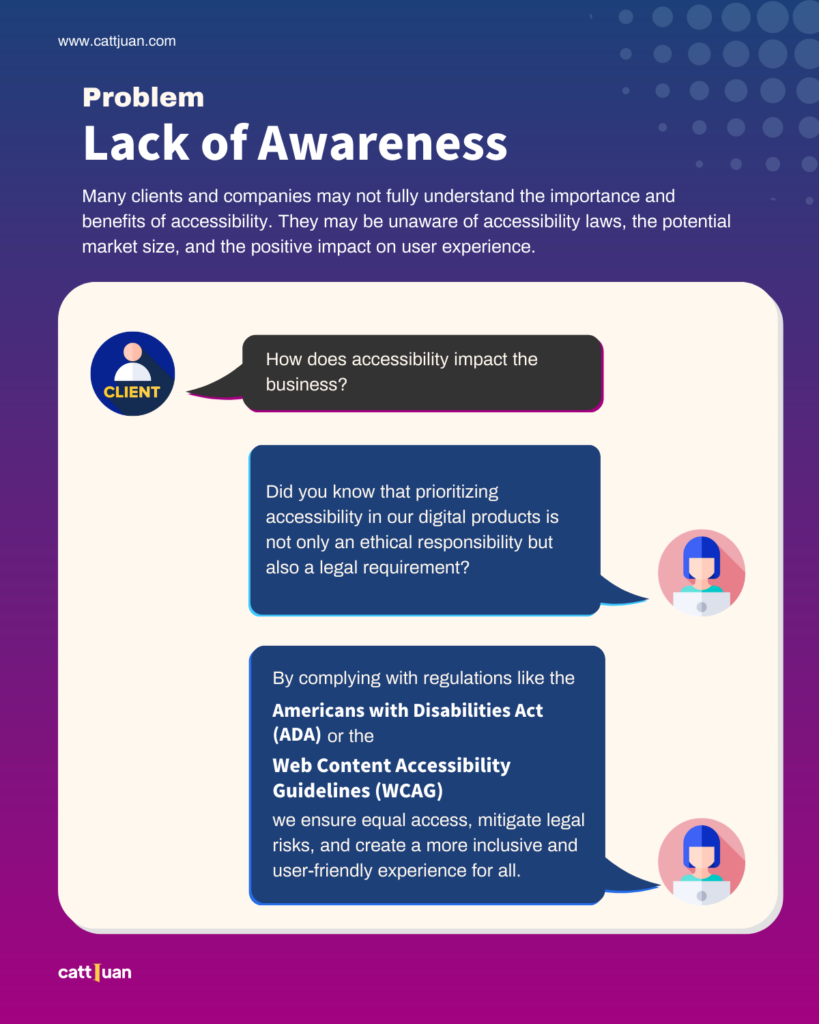
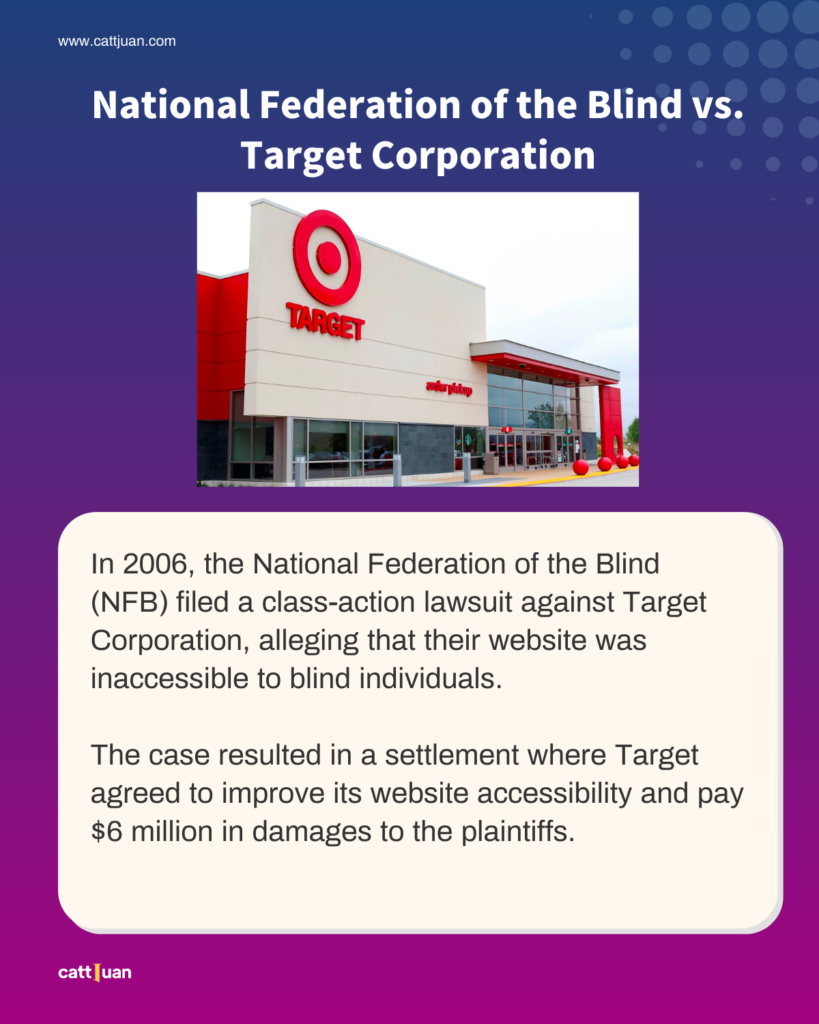
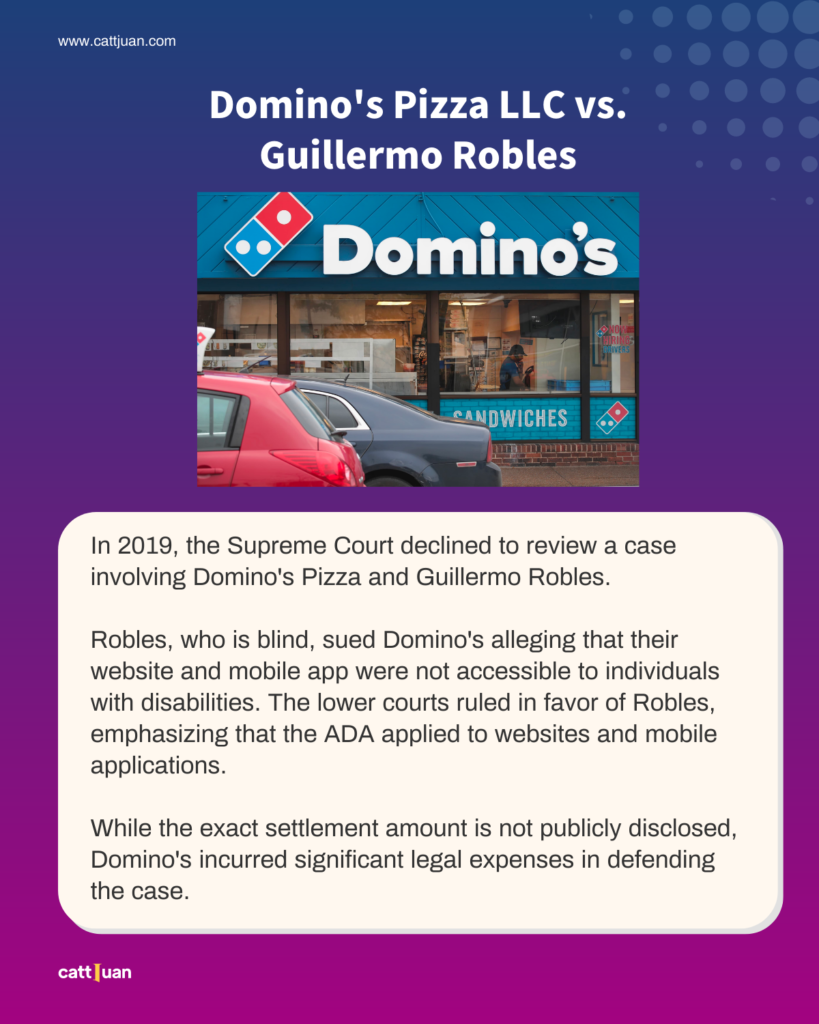
I’ve also gathered some eye-opening examples of accessibility-related lawsuits to emphasize the seriousness of the matter.
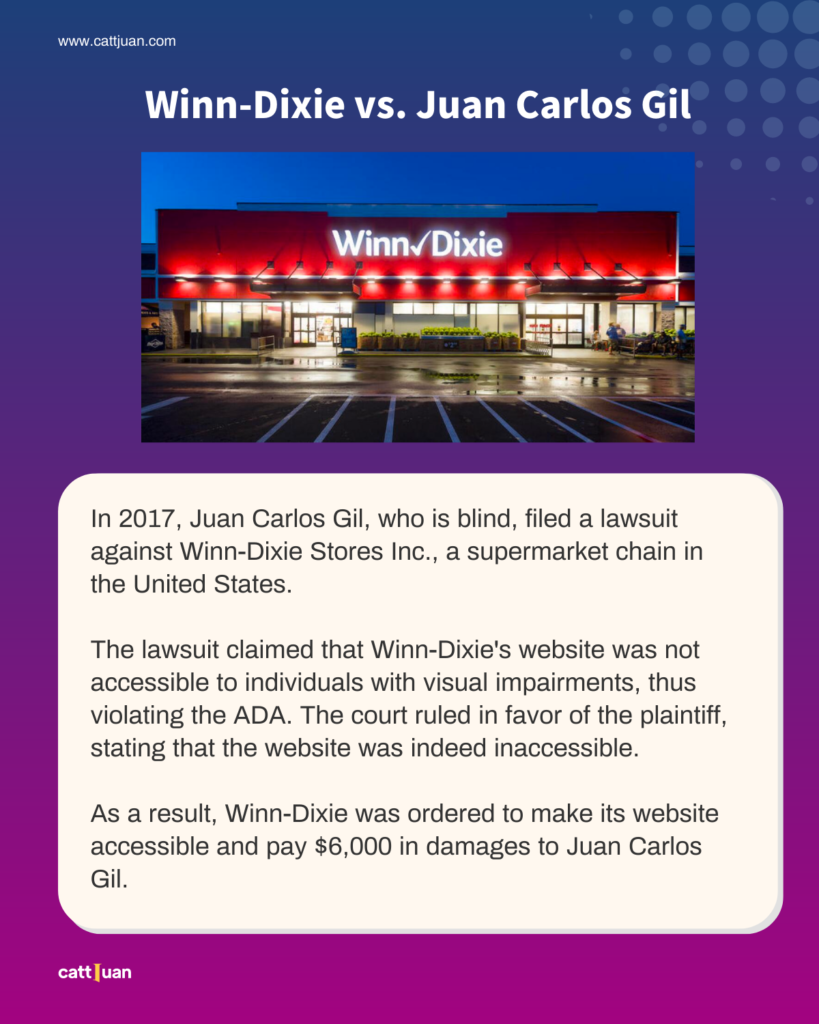
Remember that when we design with accessibility in mind, we’re not simply ticking boxes. We’re creating a welcoming digital environment where everyone can thrive. By embracing our ethical and legal responsibilities to create accessible designs, we unlock the potential for greater user engagement, customer loyalty, and societal impact. It’s an actual win-win situation!
Let’s advocate for accessibility in our design process, collaborate with diverse perspectives, and together, let’s create a digital world that celebrates inclusivity and empowers all users!”
#AccessibilityMatters #InclusiveDesign #WCAGGuidelines #DesignForAll #WebAccessibility #AccessibilityforAll
Simplified Summary
Designers have an important job in raising awareness about accessibility for clients and colleagues. When we teach them about its importance and use guidelines like WCAG, we make digital experiences that include everyone and help businesses succeed. Let's lead the way in accessibility and make the digital world more inclusive together!